


GINA Research Projects Overview
GINA collaborates and partners with many organizations and agencies to bring data and geospatial science to Alaska. This table offers a look into some of these projects, specifically those related to GINA’s scientific research.
Current Projects
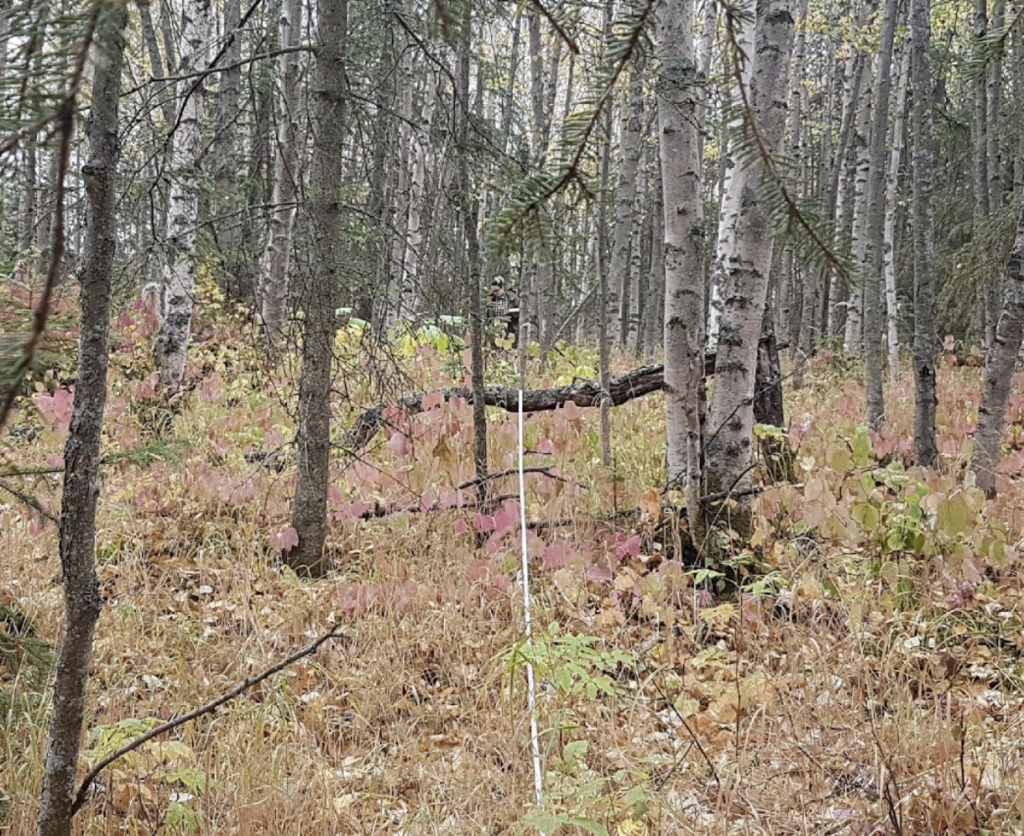
Investigators: Jennifer Schmidt (Primary Investigator, overall) with Co-Investigator Matthew Berman at the University of Alaska; Michelle Mack (PI), with Co-Investigators Joseph Little and Xanthe Walker at Northern Arizona University; Hannah Brenkert-Smith (PI) at University of Colorado; Will Putman (PI) at Tanana Chiefs Conference
Grant Award: National Science Foundation, #2127283, #2127285 and #2127284, through the Navigating the New Arctic (NNA) program
Award Value: $2,291,321
Years Funded: 2021 – 2027
Partners: University of Colorado Boulder, Northern Arizona University, Tanana Chiefs Conference
Researchers are working with agency personnel managing forest lands and wildfire to create an integrated framework to evaluate fuel treatments; assess their short-term and long-term ecological effects and influence on wildfire behavior; examine how likely they are to be acceptable to residents; and evaluate the ability of alternative fuel treatment designs to achieve social, ecological, and public safety goals.
Website: NNA SAFRR Project Overview, Alaskan Fuel Treatment Analysis Dashboard
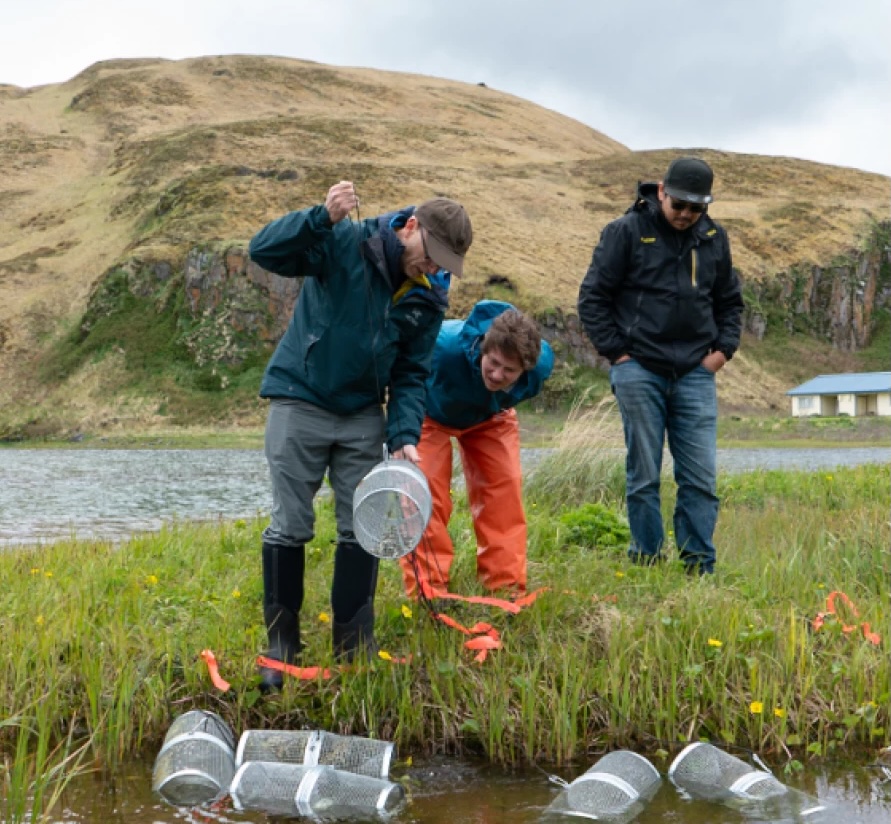
Sustainable management of human organic pollutant exposure (HOPE) at formerly used defense sites in the changing Arctic
Investigators: Jennifer Schmidt (Principal Investigator) and Toby Schwoerer at the University of Alaska
Grant Award: National Science Foundation, #2148058, through Navigating the New Arctic (NNA) and Arctic System Science (ARCSS)
Award Value: $419,144
Years Funded: 2022, 2023, 2024, 2025, 2026, 2027
Partners: The University of Arizona, University of Nevada
The research team is collaborating closely with the Qawalangin Tribe of Unalaska and City of Unalaska through a participatory research approach to understand the risks of human exposure to POPs on Unalaska Island. The community-driven co-production approach enables the continuation of culturally important subsistence lifestyles, trains residents for research and management techniques, and fosters proactive and sustainable public health risk management.
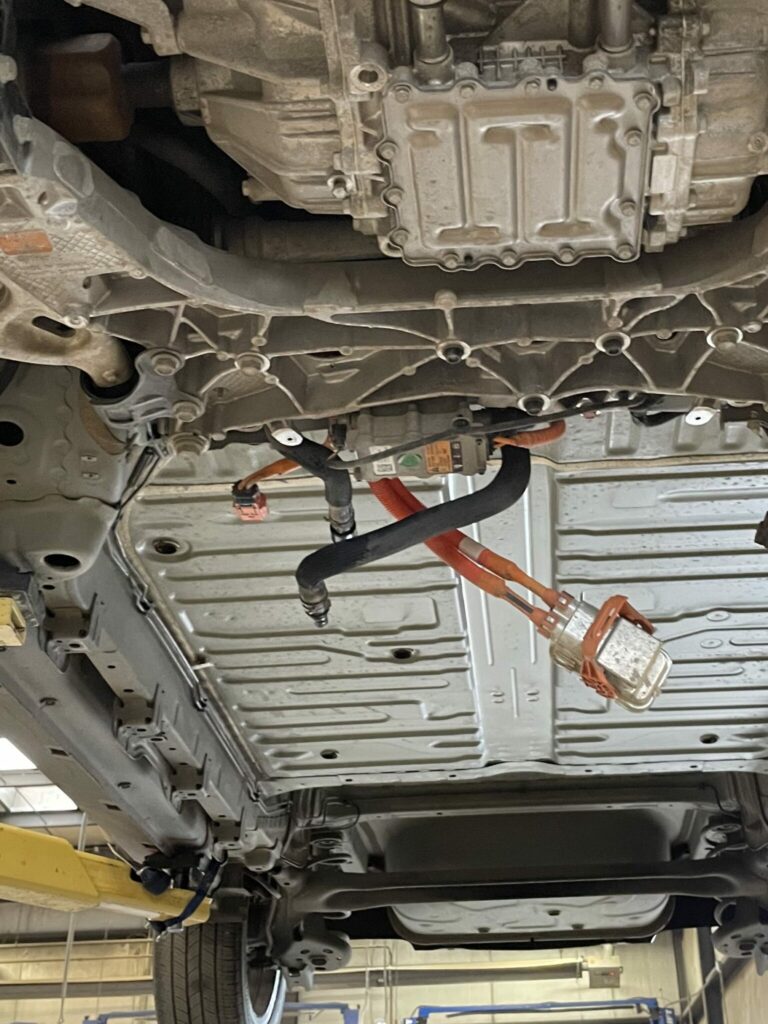
Investigators: Michelle Wilber, Jennifer Schmidt, Mohammad Heidari Kapourchali, Toby Schwoerer
Grant Award: National Science Foundation, #2318384 and #2318385, through Navigating the New Arctic (NNA)
Award Value: $3,000,000
Years Funded: 2024, 2025, 2026, 2027, 2028
Partners: The Native Village of Kotzebue, Louden Tribe (Galena)
The goal of this project is to determine EV’s interactions with cold weather, microgrids, people, and policy. The project will advance the knowledge of off-road vehicle end use in rural communities, EV performance in extremely cold temperatures, economic constraints around EV use, and how EVs would integrate with existing vehicle use patterns and needs.
Website: Electric Vehicles in the Arctic

Urban Snow Modeling to Advance Resilience for Today and Tomorrow
Investigators: Jennifer Schmidt (Principal Investigator), Co-Investigators are Jennifer Delamere, Christina Buffington, Yifan Cheng, Cenlin He, Andrew Newman
Grant Award: National Science Foundation, #2438848, through Confronting Hazards, Impacts and Risks for a Resilient Planet (CHIRRP)
Award Value: $1,000,000
Years Funded: 2025, 2026, 2027, 2028
Partners: State University of New York, National Center for Atmospheric Research (NCAR)
This project will examine the many impacts of heavy snow loads on roofs in Anchorage, Alaska, and explore ways people and businesses perceive and can mitigate risk and prevent building collapses. To do so, the project will combine approaches in modeling, community surveys and youth education efforts. Through improved modeling, this project will improve predictions for water levels, power generation, and transportation. The information generated through community surveys and meetings will guide businesses and residents on when and how to safely remove snow.
News: Stricker (Dec. 2, 2025); Hughes (Dec. 3, 2025); Fellows (Dec. 4, 2025)

Wildfire Resilience
Investigators: Jennifer Schmidt, Jennifer Delamere, Hannah Mair, Kate Hayes, Hilary Shook
Grant Award: N/A
Award Value: $301,954
Years Funded: 2026, 2027
Partners: Alaska Venture Fund, Alaska Fire Science Consortium
The Alaska Venture Fund’s Wildfire Resilience Program is partnering with the University of Alaska to commission three strategic research projects essential for advancing fire management and community preparedness across Alaska.
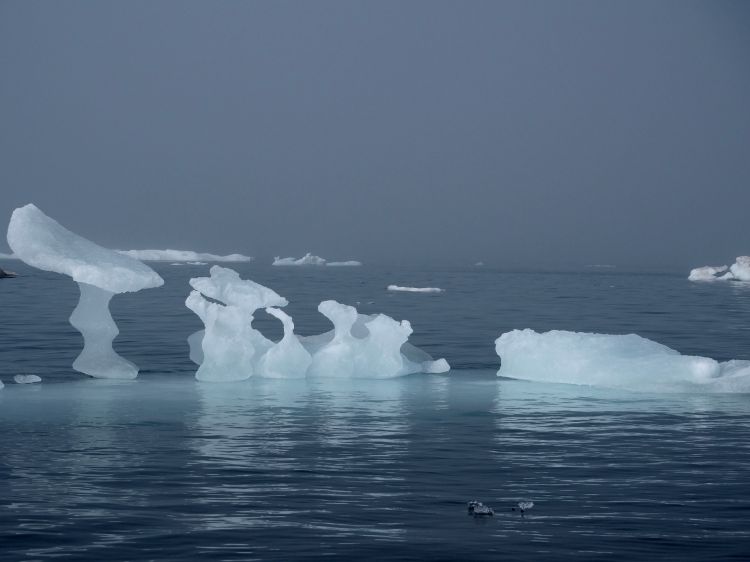
Investigators: Matt Berman (Principal Investigator) and Jennifer Schmidt (Co-Principal Investigator) at University of Alaska, with Co-Investigators Jianguo Liu, Andrés Viña and Sue Nichols
Grant Award: National Science Foundation, #2032786, through Arctic System Science (ARCSS)
Award Value: $644,459
Years Funded: 2021 – 2028
Partners: Michigan State University
Research to understand the complex, cascading effects that climate change, natural resource development, shipping, and tourism are bringing to the people and nature in the Bering Strait region of Alaska.
Past Projects
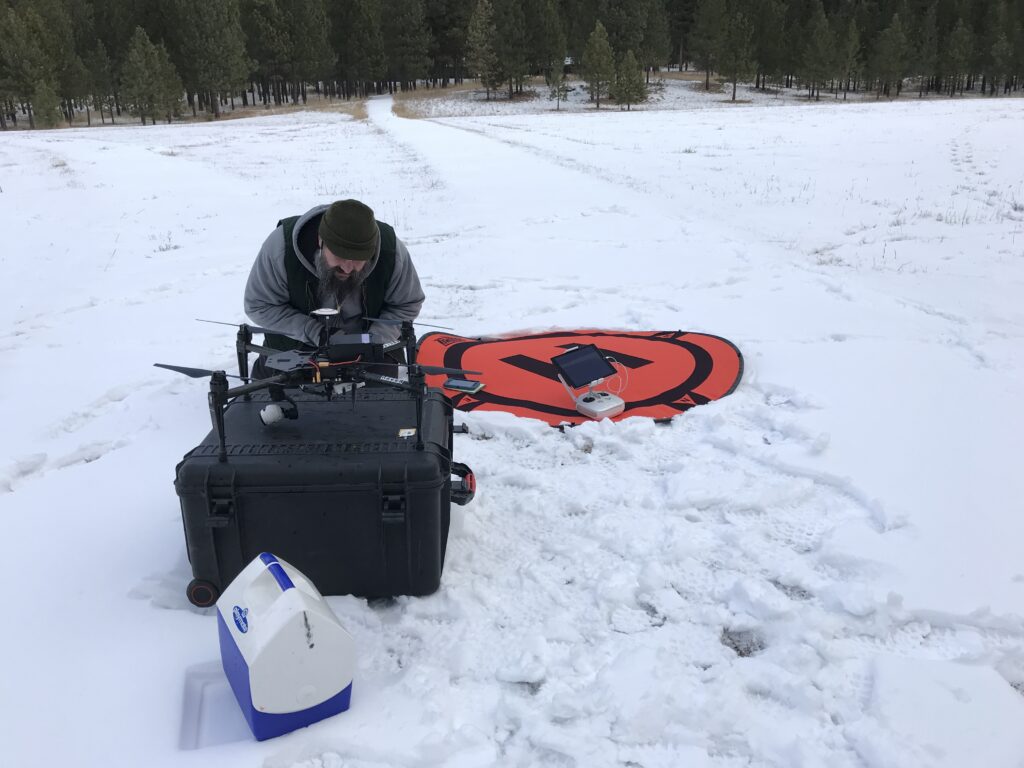
Natural Resource Supply Chain Optimization using Aerial Imagery Interpreted with Machine Learning Methods
Investigators: Jesse Johnson (Principal Investigator) with Co-Investigators Joel Harper and Carl Seielstad at the University of Montana. Jennifer Schmidt (Co-Principal Investigator) with Co-Investigators Kenrick Mock and Caixia Wang at the University of Alaska.
Grant Award: National Science Foundation, #2119689, through EPSCoR RII Track-2
Award Value: $3,914,106
Years Funded: 2022, 2023, 2024, 2025, 2026
Partners: University of Montana
This collaboration between the University of Montana and the University of Alaska Anchorage brings students and researchers together through internships to conduct research that is responsive to the needs of their natural-resource-based economies. The project specifically focuses on snow water resources, wildland fire management, and abandoned oil well monitoring. Using drones collect high‑quality imagery and environmental measurements, and applying machine learning techniques to interpret these large, complex datasets, the project seeks to answer key questions of environmental resources, strengthen ties between academia and industry, and support students through internships.
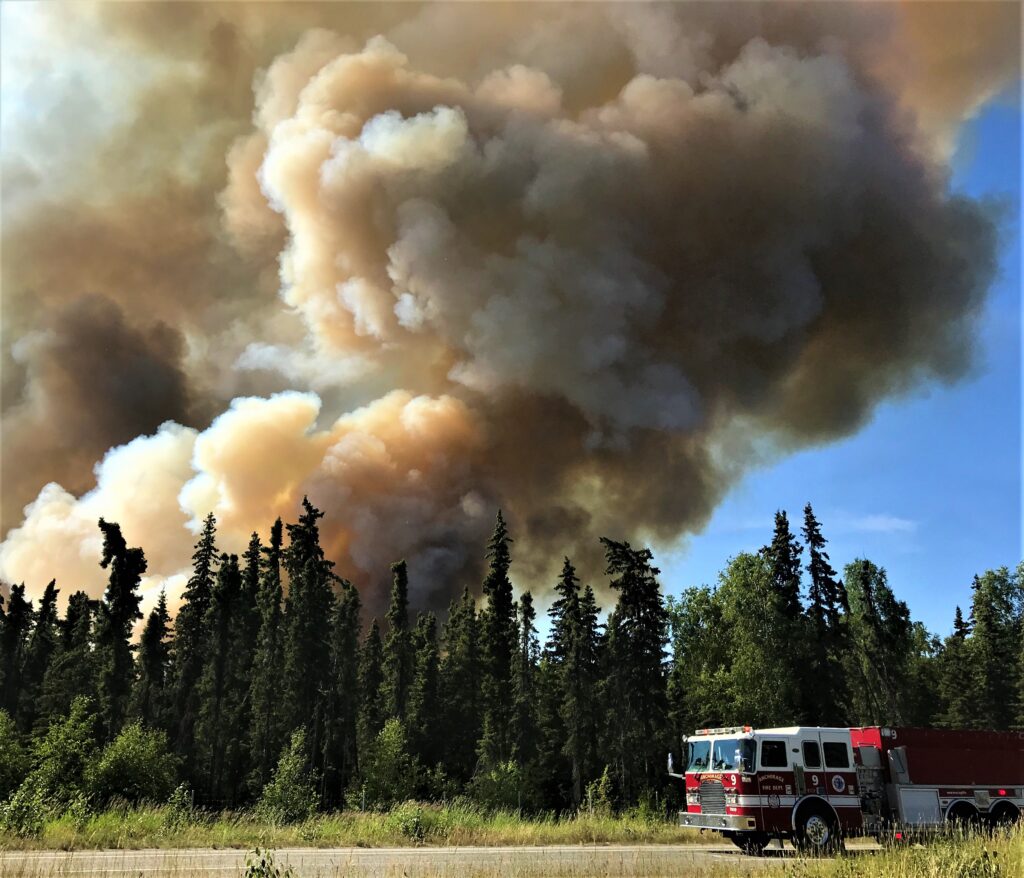
Anchorage Fire Department (AFD) Wildfire Modeling
Investigators: Jennifer Schmidt
Grant Award: Award directly for a value of $15,000
Years Funded: 2025
Partners: Municipality of Anchorage
Assisted the Municipality of Anchorage with wildfire modeling and ranking for the Community Wildfire Protection Plan.
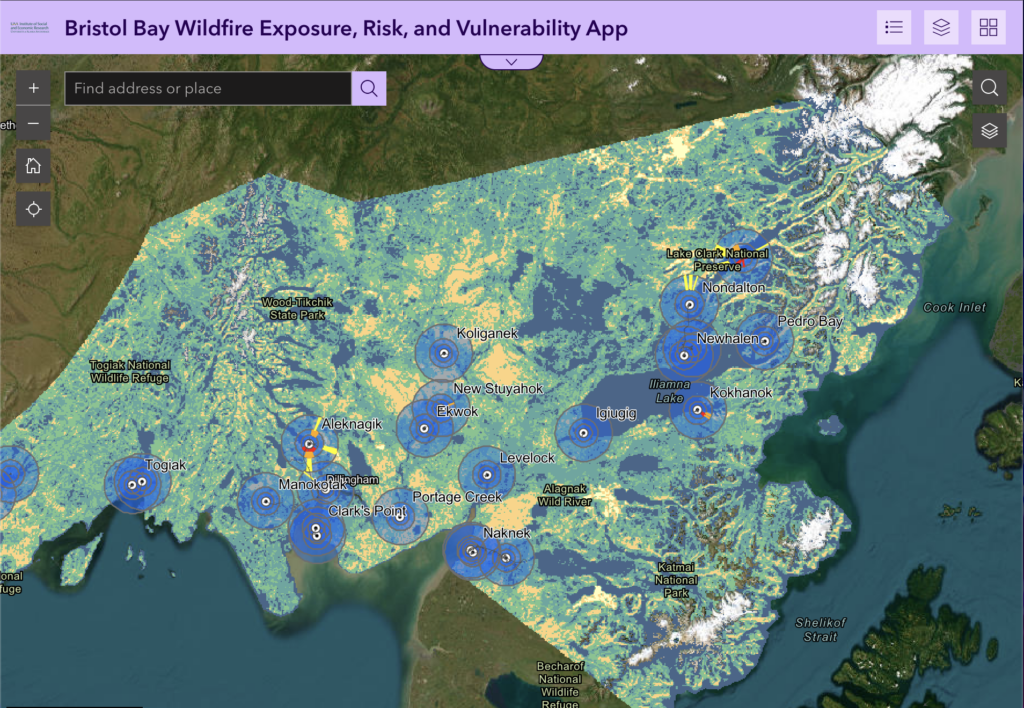
Wildfire Risk Assessment for Igiugig, Dillingham, and Aleknagik
Investigators: Jennifer Schmidt, Jennifer Delamere, Hannah Mair, Owen Larson
Grant Award: Awarded directly for a value of $109,164
Years Funded: 2023, 2024, 2025, 2026
Partners: Alaska Venture Fund
Created a current (2023) and future (2060) wildfire exposure and risk map using the vegetation model developed based on tundra regions of Alaska wildfire effects on vegetation and subsequent succession.
Web App: Bristol Bay Wildfire Risk, Exposure and Vulnerability
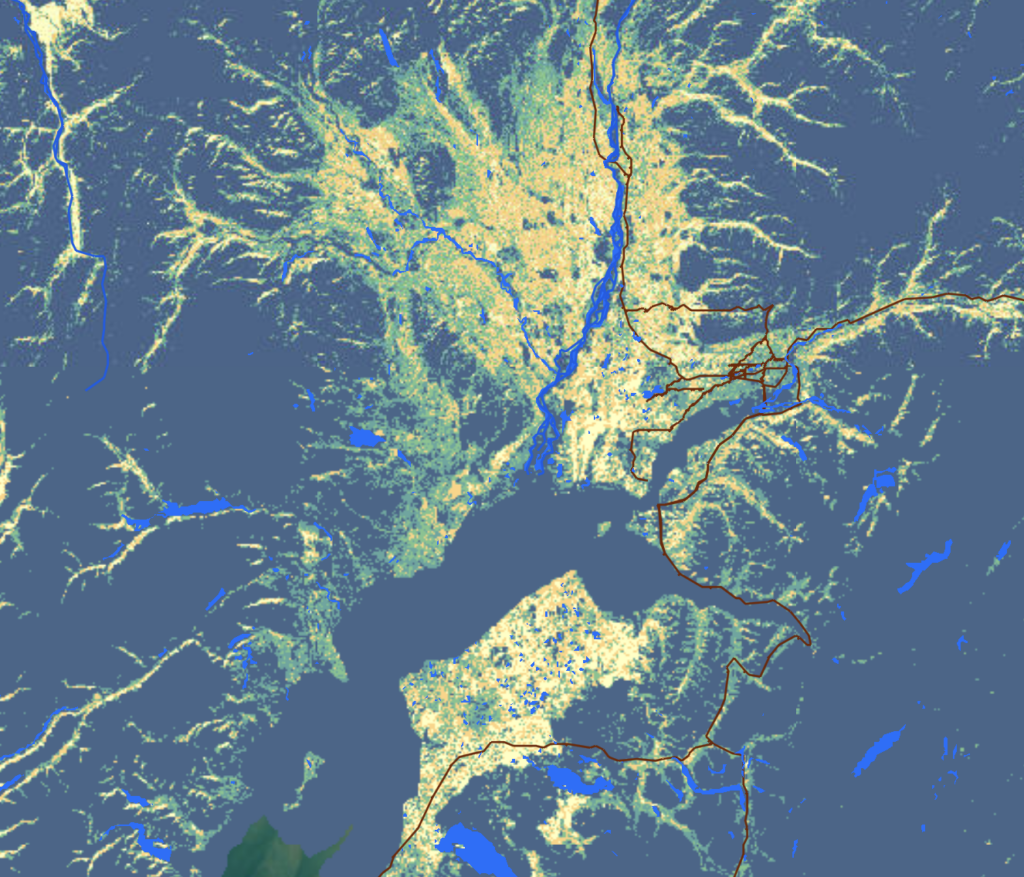
Alaska Statewide Wildfire Exposure Update
Investigators: Jennifer Schmidt, Jennifer Delamere, Hannah Mair, Owen Larson
Grant Award: Awarded directly for a value of $10,000
Years Funded: 2025, 2026
Partners: Alaska Venture Fund
Created an updated statewide wildfire exposure map and created codes to facilitate future updates.
Web App: Alaska Wildfire Exposure (2025)
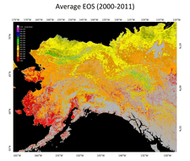
Investigators: Jiang Zhu, Chuck Lindsay, Michael Hannam, Amy Miller, Bradley Reed, Michael Budde, Page Spencer, David Swanson, Jennifer Delamere, Peter Kirchner, William Barndt, Dayne Broderson, Robert Torgerson, and Parker Martyn
Grant Award: National Park Service, F2101050001 (USGS); J2141090006, P13AC00836, and P19AC00351 (UAF)
Years Funded:
Partners: National Park Service, U.S. Geological Survey
GINA and the National Park Service developed a MODIS-derived NDVI metrics algorithm. Using eMODIS data from the U.S. Geological Survey, the algorithm took 7-day composite eMODIS NDVI data and calculated 12 different metrics (e.g. start of season, end of season, rate of green-up, etc.) The data products from this project are available as 250m-resolution raster images of MODIS-derived yearly NDVI metrics. The data coverage includes the entire state of Alaska for the years between 2003 and 2020.
Website: GINA’s archived webpage on MODIS-derived NDVI metrics
Data: Arctic Data Center 2003-2021 MODIS Growing Season Metrics

Investigators: Jiang Zhu, Chuck Lindsay, Peter Kirchner, Amy Miller, David Swanson, Michael Budde, Bradley Reed, Page Spencer, Jennifer Delamere, William Barndt, Michael Hannam, Dayne Broderson, Robert Torgerson, and Parker Martyn
Grant Award: National Park Service, F2101050001 (USGS); J2141090006, P13AC00836, and P19AC00351 (UAF)
Years Funded:
Partners: National Park Service, U.S. Geological Survey
GINA and the National Park Service developed an algorithm to derive snow cover climatology for Alaska using the MODIS snow cover daily product. Using Terra MODIS snow cover data from the National Snow and Ice Data center, the algorithm processes the data and derives 12 snow cover metrics (e.g. date of first snow, date of persistent snow cover, etc.) for each pixel. The data coverage includes the entire state of Alaska for the years between 2001 and 2020.
Website: GINA’s archived webpage on MODIS-derived Snow Metrics
Data: Arctic Data Center 2001-2022 MODIS Snow Season for Alaska